

Hip Fracture Recovery: Getting Back to Independence

Hip Fracture Recovery: Getting Back to Independence
9–13 minutes

Nadia Joybari, R.Kin
✓ Registered Kinesiologist (BCAK)
✓ 10+ Years Experience
✓ ICBC Approved Provider
🎯 Key Takeaway
Hip fracture recovery is about more than healing the fracture. Long-term independence depends on rebuilding strength, balance, walking ability, confidence, and daily function through progressive movement.
A hip fracture can change daily life very quickly. One day, walking, using stairs, cooking, driving, or going out independently may feel normal. After a fracture, those same activities can suddenly feel difficult, unsafe, or exhausting.
For many people, the hardest part of hip fracture recovery is not only the pain or surgery. It is the loss of confidence. You may worry about falling again, putting weight through the injured side, moving the “wrong” way, or not getting back to your previous level of independence.
Recovery takes time, but it does not have to feel passive or uncertain. With the right medical clearance, progressive movement, strength training, balance work, and functional practice, many people can rebuild their ability to move more safely and confidently.
As a Kinesiologist, the focus is not only on giving exercises, but on helping you understand what your body needs next: when to build strength, when to improve balance, when to practice walking, and how to return to daily life in a way that feels safe and realistic.
Why Is Hip Fracture Recovery So Important for Independence?
Hip fractures are serious injuries, especially for older adults. They often require surgery, a hospital stay, and a period of rehabilitation. After discharge, many people are given basic exercises and walking instructions, but they may still feel unsure about how to progress safely once they are back home.This is where the recovery process becomes very important.
After a hip fracture, the body often loses strength, balance, walking confidence, and endurance. Even short periods of reduced activity can lead to muscle loss, stiffness, fatigue, and fear of movement. If these issues are not addressed, simple daily activities can remain difficult for much longer than expected.
Hip fracture recovery is not only about the bone healing. It is about rebuilding your ability to stand, walk, climb stairs, carry groceries, move around the kitchen, and return to the activities that help you feel independent. This is why Active Aging: Why Movement Matters More After 65 is so relevant after a hip fracture — movement becomes one of the most important tools for protecting independence, confidence, and quality of life.
What Makes Recovery After a Hip Fracture Feel So Difficult?
Many people are surprised by how weak or unsteady they feel after a hip fracture. This does not mean they are failing. It usually means the body has gone through a major injury, surgery, pain, stress, and a period of reduced movement.
Several factors can make recovery feel harder. Pain and stiffness can make it difficult to move normally. If the hip feels sore, the body may naturally avoid loading that side. Over time, this can create limping, guarded movement, or overuse of the opposite leg.
Muscle weakness is also common. The hip, glutes, thighs, calves, and core all help with walking, balance, and standing from a chair. When these muscles lose capacity, everyday tasks require more effort. This is one reason Senior Strength Training: Building Muscle After 60 becomes especially important during recovery — strength is not just about fitness; it directly affects walking, stair use, fall prevention, and daily independence.
Fear of falling can also become a major barrier. Even when the fracture is healing well, the nervous system may remain protective. You may move slower, avoid stairs, avoid uneven sidewalks, or feel nervous walking outside.
For people recovering in Vancouver, outdoor mobility can add another layer of challenge. Rain, hills, curbs, uneven sidewalks, stairs, and busy crossings can make the transition from indoor walking to real-life movement feel more demanding.
How Can Active Rehab Help After a Hip Fracture?
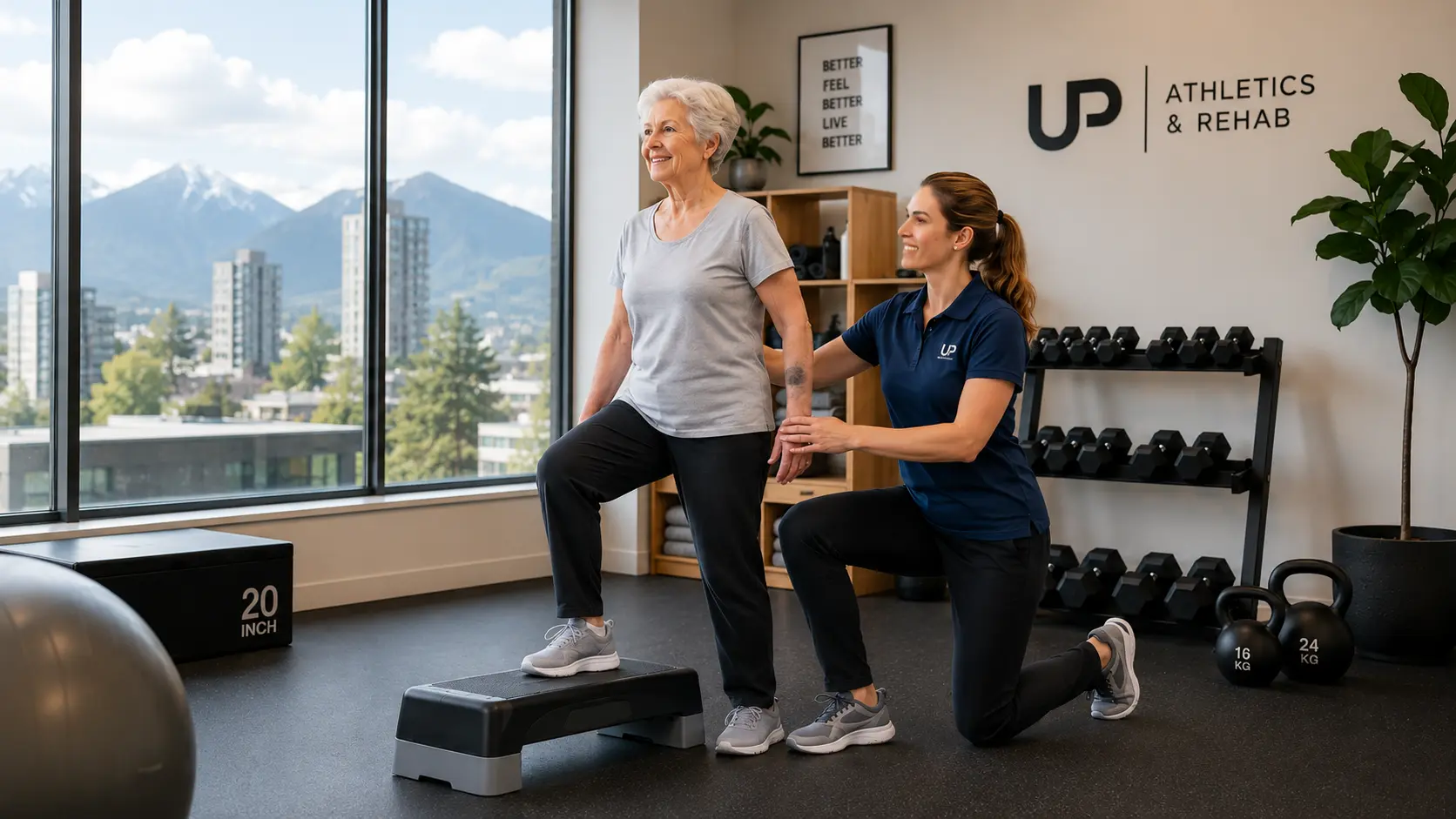
Active Rehab helps bridge the gap between basic healing and real-life independence. Once you have medical clearance and understand any weight-bearing or movement precautions from your surgeon or healthcare team, a progressive rehab plan can help you rebuild the movements you need for daily life.
Hip fracture recovery sessions may include:
- Gentle mobility work to reduce stiffness
- Strength exercises for the hips, legs, and core
- Balance and weight-shifting practice
- Walking retraining and gait confidence
- Sit-to-stand and stair progression
- Functional exercises for daily tasks
- Education on pacing, safety, and confidence
- Gradual return to community walking and activity
The goal is not to rush recovery. The goal is to progress at the right pace for your body, your surgery, your symptoms, and your goals. This is also where individualized care matters. Two people can have the same type of hip fracture but very different needs. One person may need help standing from a chair. Another may need help walking outside again. Another may be trying to return to gardening, fitness, or independent errands.
A Kinesiologist looks at how your body moves as a whole. That includes how you shift weight, how you use the injured side, how your balance responds, how your walking pattern changes, and how your confidence affects movement. This helps turn rehab into practical progress rather than a list of disconnected exercises.
What Exercises Help You Regain Walking, Strength, and Balance?
The right exercises depend on your stage of healing, your medical instructions, your pain levels, and your current function. In early recovery, exercises are often simple and controlled. As you improve, they should become more functional and specific to daily life.
Early-stage exercises may focus on gentle activation and circulation. These may include ankle pumps, quad contractions, glute squeezes, supported standing, and short walking practice.
As confidence improves, the focus often shifts toward strength and control. Sit-to-stands, supported mini-squats, step-ups, bridges, standing hip movements, and gentle resistance exercises can help rebuild the muscles that support walking and balance.
Later-stage recovery often includes more functional work. This may involve stair practice, carrying light objects, walking on different surfaces, turning, reaching, and practicing movements that reflect real life.
Balance training is especially important. After a hip fracture, many people do not only need stronger muscles — they need better confidence shifting weight, reacting, and staying steady. For this reason, Fall Prevention Exercises: Balance Training That Works connects closely with hip fracture recovery, especially when someone is nervous about walking outdoors, using stairs, or moving without support.
For many people, a safe recovery plan includes restoring basic movement, rebuilding hip and leg strength, improving balance and walking confidence, practicing stairs and daily tasks, and gradually returning to outdoor and community activity.
⚠️ Important Warning
Some symptoms need medical attention. Contact your healthcare provider urgently if you experience sudden worsening pain, new calf swelling, chest pain, shortness of breath, fever, wound changes, sudden weakness, or a new fall.
Why Does Fear of Falling Continue After the Hip Has Healed?
Fear after a hip fracture is very common. It makes sense. A fall may have caused a major injury, hospital visit, surgery, pain, and a sudden loss of independence. Even after the bone is healing, the brain may still treat certain movements as risky. This fear can show up as hesitation, stiffness, short steps, avoiding stairs, holding onto furniture, or refusing to walk outside alone.
The problem is that too much avoidance can slow recovery. When someone stops challenging their strength, balance, and walking ability, the body can become weaker and less confident over time.
Active Rehab helps by rebuilding trust gradually. Instead of forcing difficult movements too soon, the process should break movements down into manageable steps. This allows the body and nervous system to relearn that movement can be safe again.
For someone with osteoporosis or low bone density, this process becomes even more important. Hip fracture recovery often overlaps with broader bone-health planning, which is why Osteoporosis Exercise Guidelines: Bone Health Without Risk fits naturally into the recovery conversation. The goal is not to avoid movement, but to choose the right type, intensity, and progression of exercise. Confidence comes from repeated safe practice.
What Does Hip Fracture Recovery Look Like in Vancouver?
Recovering in Vancouver often means preparing for more than flat indoor walking. Many people want to return to walking outdoors, using transit, visiting local shops, attending appointments, or staying active in their neighbourhood. In areas like Kitsilano, Point Grey, West Broadway, and nearby Vancouver communities, daily life often involves stairs, hills, curbs, uneven sidewalks, wet weather, and longer walking distances.
A useful rehab plan should reflect those realities. That may include practicing how to get up from low chairs, walk on slightly uneven surfaces, manage curbs and steps, build confidence in wet weather, improve stair tolerance, carry groceries, and walk longer distances without excessive fatigue.
This is where rehab becomes more meaningful. The goal is not just to perform an exercise correctly in a clinic setting. The goal is to make everyday movement feel more possible again.
When Should You Get Professional Support After a Hip Fracture?
You should always follow the guidance of your surgeon, physician, and rehabilitation team after a hip fracture. However, professional movement support can be especially helpful once you are out of the early medical stage but still feel limited at home, outdoors, or in the community.
Consider working with a Kinesiologist if you feel weak or unsteady when walking, avoid stairs because of fear or fatigue, struggle to stand up from a chair, feel nervous walking outside, have lost confidence after a fall, need help progressing your exercises safely, or want to return to independent daily activities.
Some people also recover from hip fractures while managing arthritis, osteoporosis, diabetes, cardiovascular conditions, chronic pain, or other health concerns. In those situations, the rehab plan may need more careful adjustment. This is where the ideas in Managing Multiple Health Conditions: Exercise Adaptations become especially relevant, because safe exercise planning must consider the whole person — not just the injured hip.
At this stage, the goal is not simply to “do more exercises.” The goal is to understand what is still limiting your movement, rebuild strength and balance safely, and practice the real-life tasks that help you feel independent again.
For clients in Vancouver, UP Athletics & Rehab Kinesiology provides Active Rehab focused on rebuilding walking confidence, hip and leg strength, balance, stair tolerance, and everyday function after injury or surgery. The process is structured, progressive, and adapted to your current ability — so recovery feels less uncertain and more manageable.
Ready to Start Kinesiology Active Rehab?
Begin with a clinical rehabilitation plan guided by assessment, whole-body movement analysis, and your functional goals.
A Registered Kinesiologist in Vancouver can provide individualized Active Rehab to address symptoms, restore movement and function, and support a safe return to daily activities.
Located in Vancouver | Private insurance receipts available when kinesiology is covered
Frequently Asked Questions
For important health and safety information, please see our medical disclaimer, privacy policy, and terms of use.