

Pelvic Pain in Women: Rehab Approaches That Help

Pelvic Pain in Women: Rehab Approaches That Help
7–11 minutes

Nadia Joybari, R.Kin
✓ Registered Kinesiologist (BCAK)
✓ 10+ Years Experience
✓ ICBC Approved Provider
🎯 Key Takeaway
Pelvic pain in women is real, and it is often more complex than one tight muscle.
The rehab approaches that help usually combine proper assessment, symptom-specific care, and gradual support for movement and function.
The goal is to help daily life feel safer, calmer, and more manageable again.
Pelvic pain can be hard to explain. Sometimes it feels sharp. Sometimes it feels heavy, aching, burning, or deep. Sometimes it shows up with sitting, walking, sex, exercise, periods, bowel movements, or stress. Sometimes it is there every day. Sometimes it fades just long enough to make you wonder if maybe you imagined it. That uncertainty can wear people down.
Many women spend a long time trying to be patient with symptoms like these. They wait. They push through. They tell themselves it will probably settle. But pelvic pain is real, and it can be more complex than one obvious injury or one tight area. Chronic pelvic pain may continue even when one single cause is not clearly found, which is one reason broader assessment and symptom-based care are often needed.
What pelvic pain in women can feel like, and why it is often misunderstood
Pelvic pain does not always look the way people expect. It is not always one dramatic cramp or one obvious injury. It may feel like pressure low in the pelvis. It may feel like aching in the hips, groin, lower abdomen, tailbone, or low back. Some women notice bladder urgency, bowel discomfort, pain with intercourse, or symptoms that get worse around their period. Others mainly notice that sitting feels harder, exercise feels less predictable, or their body seems tense all the time. Chronic pelvic pain can be dull or sharp, constant or occasional, and it may be felt in different parts of the pelvic area rather than in just one spot. That variety is one reason pelvic pain is often misunderstood.
When symptoms shift from day to day, it is easy to question them. When scans are normal, some people assume nothing important is going on. When pain overlaps with the bladder, bowel, abdomen, hips, or low back, it can be hard to tell where the problem is really coming from. But “hard to explain” does not mean “not real.” In chronic pelvic pain, symptoms may reflect more than one contributor at the same time.
For many women, the first real step forward is simply realizing that pelvic pain deserves attention even when the picture is not simple.
Why pelvic pain is not always “just a pelvic floor issue”
The pelvic floor matters. But it is not the whole story. Pelvic pain can be related to gynecologic conditions, bladder or bowel issues, pelvic floor dysfunction, musculoskeletal strain, nerve irritation, or pain-system changes that make the body feel more protective over time. Chronic pelvic pain may also involve more than one contributor at once, which is why one simple explanation often does not fully fit.
Sometimes the pelvic floor is overactive and guarded. Sometimes the hips and trunk are not sharing load well. Sometimes stress, sleep disruption, constipation, scar sensitivity, or fear of movement add another layer. NICE’s guidance on pelvic floor dysfunction emphasizes symptom-specific care rather than assuming every woman needs the same intervention.
That is why it helps to think bigger than one muscle group.
Some women need more support and strength. Some need less guarding and less tension. Many need both, just at different times. And when pain has been around for a while, the nervous system can become part of the story too. That is one reason Understanding Chronic Pain: Why Your Body Won’t Stop Hurting fits so well here. Pelvic pain can involve irritated tissues, but it can also involve a body that has become too protective for too long.
Rehab approaches that may help calm symptoms and improve function
Helpful rehab usually starts with the right kind of assessment.
That may mean speaking with a family doctor, gynecologist, or another appropriate medical provider first, especially if symptoms are new, worsening, or difficult to explain. ACOG recommends a multidisciplinary approach for chronic pelvic pain because it is often complex and rarely explained by one factor alone. From there, rehab works best when it matches the person in front of you.
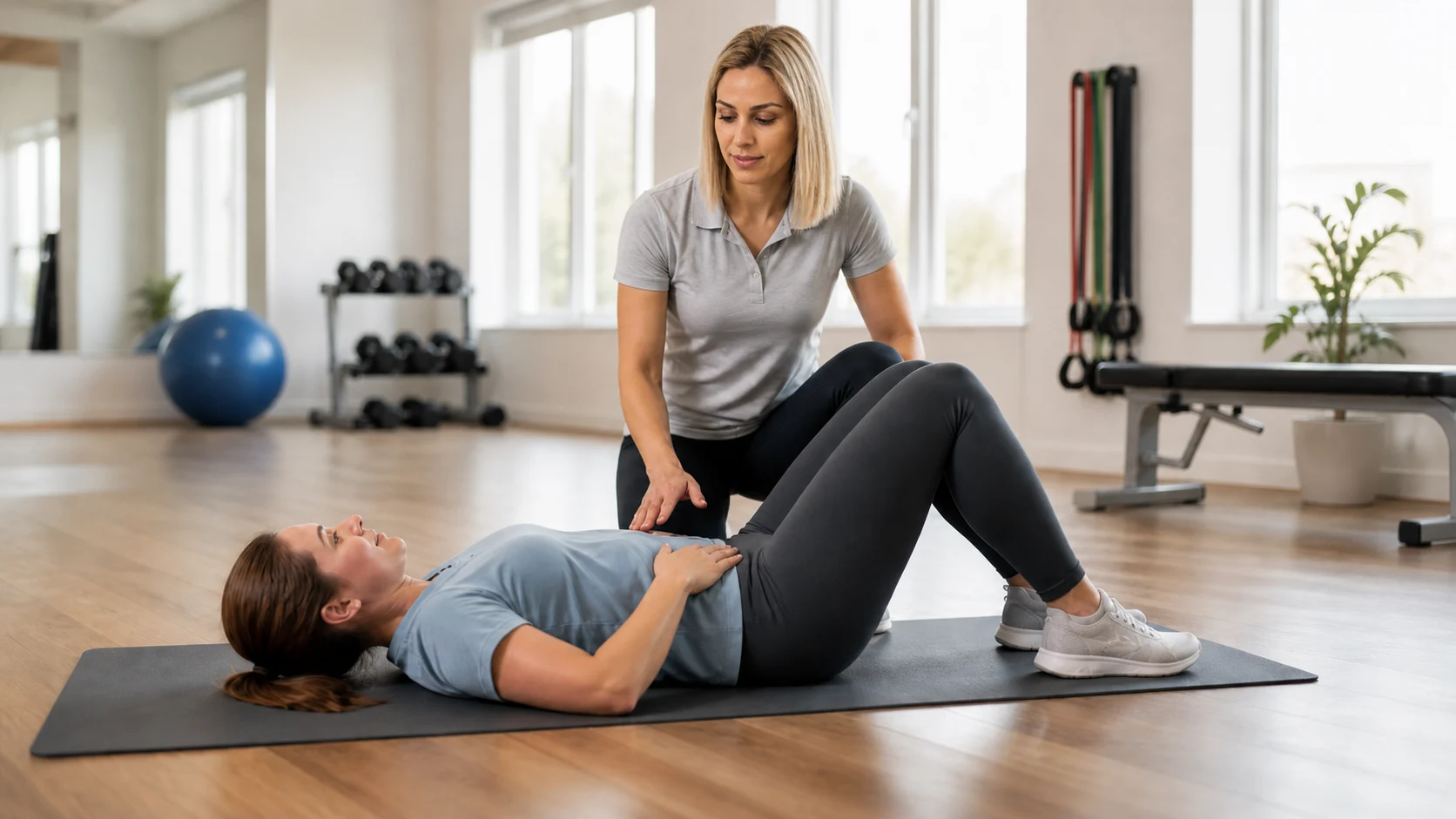
For some women, that means learning how to reduce guarding. Breathing work, relaxation, gentle mobility, and pacing may help when the body has become tense and reactive. For others, the focus is more on improving trunk, hip, and pelvic control so everyday movement does not feel effortful all the time. For others, the first win is simply being able to sit longer, walk farther, or get through the day with less fear of a flare. Symptom-specific care is consistent with current guidance for chronic pelvic pain and pelvic floor dysfunction. This is where kinesiology can be useful.
Kinesiology-based rehab can help with graded return to movement, pacing, strength, mobility, pressure management, and confidence with daily activity. It can also help bridge the gap between “I know I should move” and “My body still does not feel safe doing it.” When symptoms have been hanging around for a while, that bridge matters.
You do not need to force your way back. You need a starting point your body can tolerate. Usually that means simple, repeatable movement, realistic pacing, and enough consistency for the system to stop bracing against every little demand. For some women, that fits naturally within kinesiology active rehab or Pain Relief Active Rehab, especially when the goal is to rebuild tolerance, confidence, and day-to-day function. That kind of symptom-focused, function-first approach aligns with how chronic pelvic pain care is generally framed when one clear cause is not enough to explain everything.
When to think about movement, strength, and nervous system support
A lot of women with pelvic pain become careful with movement. That makes sense.
If walking flares symptoms, if sex is painful, if workouts feel unpredictable, or if sitting all day leaves the pelvis feeling heavy and irritated, doing less can feel like the safest option. In the short term, that may help. Over time, though, doing less can also lower confidence and reduce the body’s ability to tolerate normal daily demands. That is where movement support can help. Not aggressive exercise. Not pushing through pain. Support.
Breathing can matter. Ribcage position can matter. Hip strength can matter. Trunk control can matter. The pelvic floor does not work alone. It works with the diaphragm, abdominal, hips, posture, and pressure management. That is why Core Stability for Injury Prevention connects here too. The goal is not stiffness. It is coordinated support without unnecessary gripping. NICE’s symptom-based approach is consistent with that broader way of thinking about function.
The nervous system matters as well. When pain has been present for a while, the body often becomes quicker to guard. Muscles tighten earlier. Stress matters more. Sleep matters more. Small triggers feel bigger. That does not mean the pain is imagined. It means the system has become more protective, which is a real part of persistent pain. Mayo Clinic notes that when one clear cause is not found, treatment often focuses on easing symptoms and improving quality of life.
That is why progress is not always about making pain disappear first. Sometimes it is about helping the body feel safe enough to move again.
Signs you should seek medical assessment sooner
Rehab can help a lot. But some symptoms need medical review first.
Sudden or severe pelvic pain should not be brushed off. Heavy bleeding, fever, nausea or vomiting, fainting, pain during pregnancy, or symptoms that feel urgent deserve prompt medical attention. The NHS advises urgent assessment for sudden, severe pelvic pain, especially when it comes with other concerning symptoms, and recommends getting help when pelvic pain is persistent or keeps returning.
Even when it is not an emergency, it is worth seeking assessment sooner if pelvic pain keeps coming back, interferes with walking, sleep, sex, exercise, bladder or bowel function, or keeps making daily life feel smaller than it should. That does not automatically mean something catastrophic is happening. It means the issue deserves attention.
The earlier the pattern is understood, the easier it often is to build the right plan. For some women, that plan includes medical treatment. For others, it includes symptom-guided rehab that focuses on movement, pacing, and confidence. Often, it is a combination. A team-based, symptom-specific approach is consistent with current guidance for chronic pelvic pain and pelvic floor dysfunction.
That is the part worth remembering. Pelvic pain in women is not something you have to simply put up with. A thoughtful rehab approach can help make symptoms feel less overwhelming, movement feel less threatening, and daily life feel more doable again. And if pain has led to surgery or a longer recovery, Post Surgery Active Rehab may also be part of the bigger picture.
Ready to Start Kinesiology Active Rehab?
Begin with a clinical rehabilitation plan guided by assessment, whole-body movement analysis, and your functional goals.
A Registered Kinesiologist in Vancouver can provide individualized Active Rehab to address symptoms, restore movement and function, and support a safe return to daily activities.
Located in Vancouver | Private insurance receipts available when kinesiology is covered
Frequently Asked Questions
For important health and safety information, please see our medical disclaimer, privacy policy, and terms of use.